Maria Ilinsky Message me

Therapy for anxiety and panic attacks in London and online

For adults who worry most of the time, have panic attacks or can’t switch off. In Marylebone or online, in English or Russian.

Psychotherapy sessions

In person at 85 Wimpole Street

And online via Zoom

Duration — 50 minutes

Fee — £120

You can ask a question first. I usually reply within an hour. Confidential

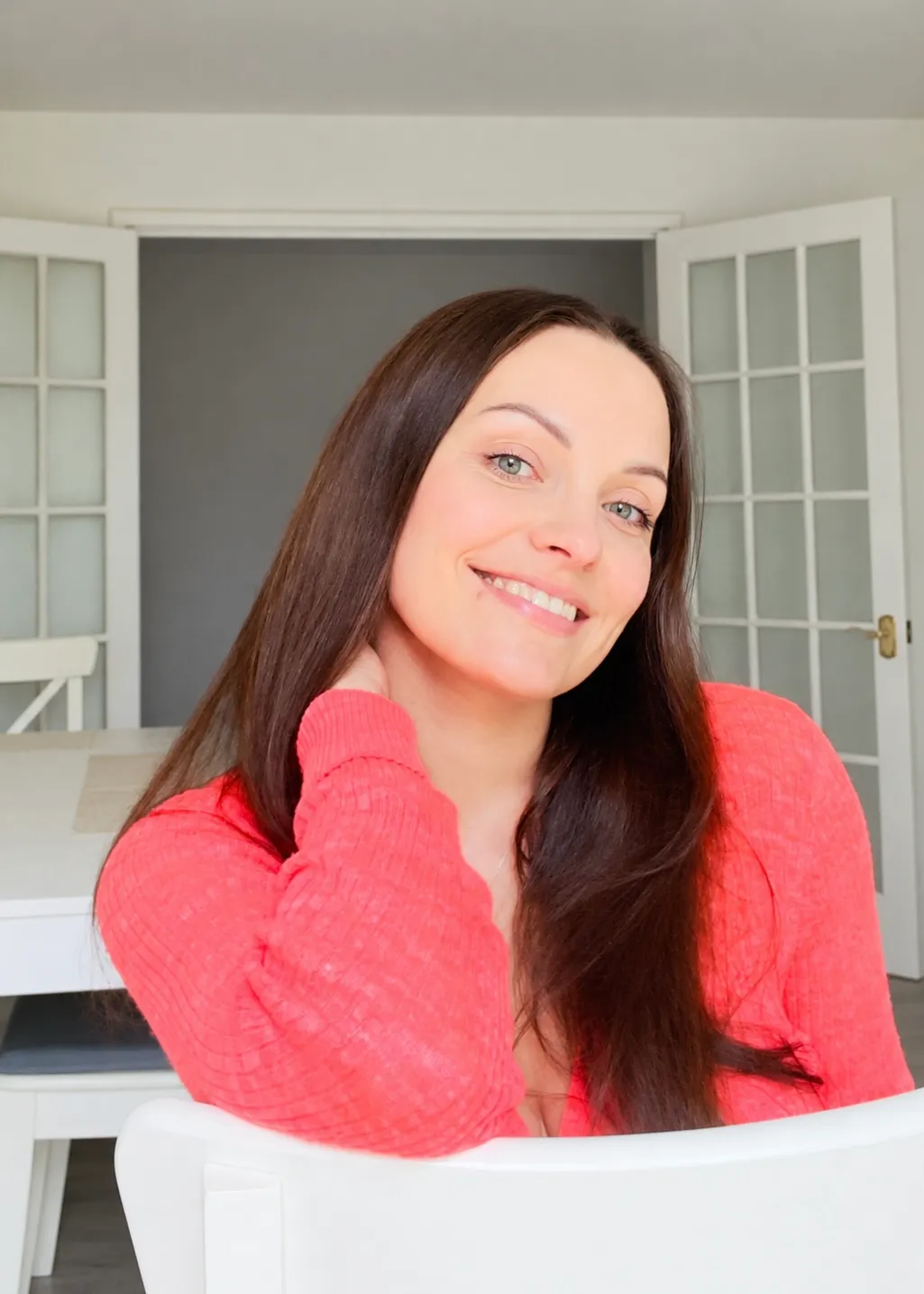
Maria Ilinsky, Psychotherapist in London
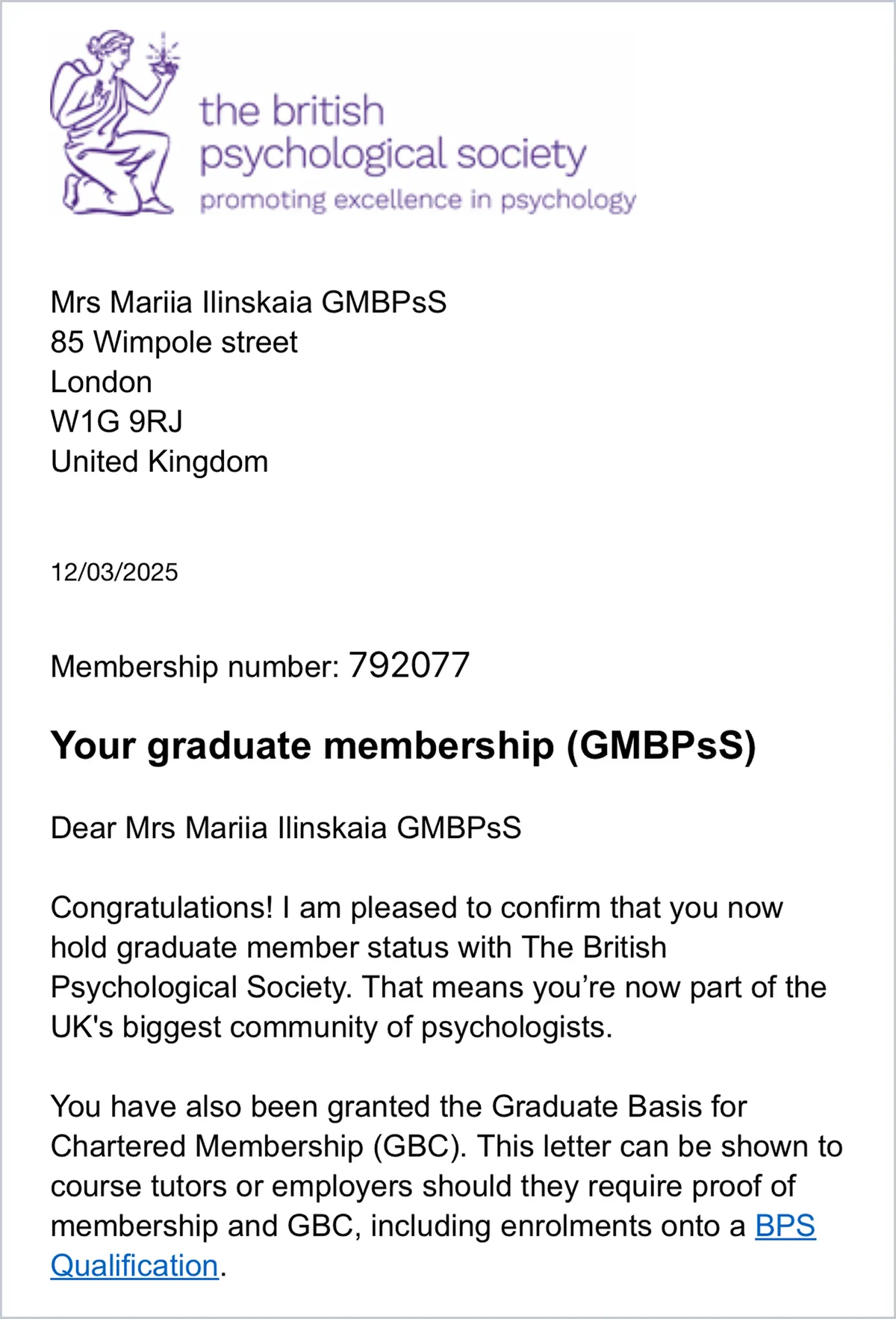
GMBPsS
Graduate Member of the British Psychological Society
14 years
of practice
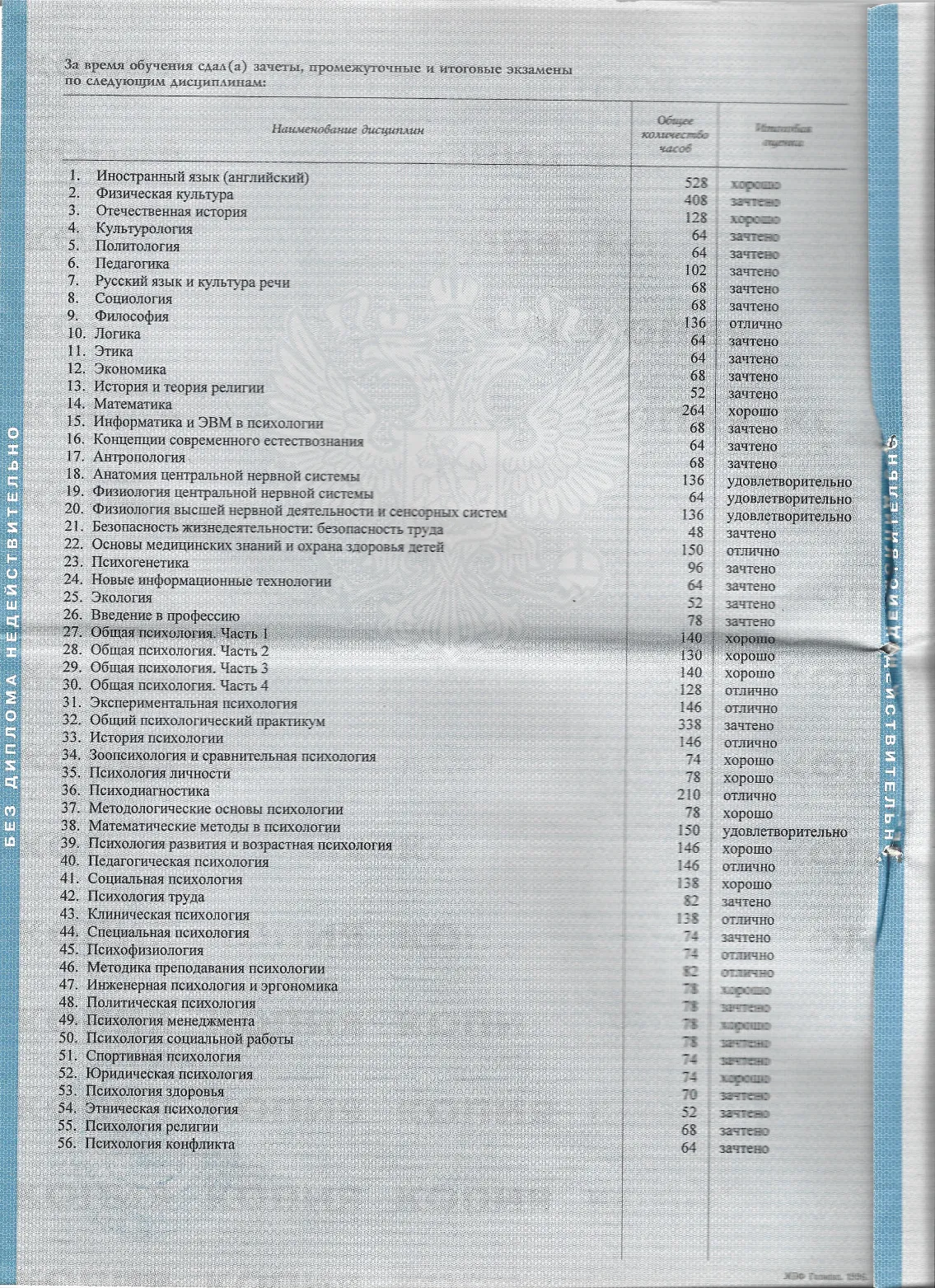
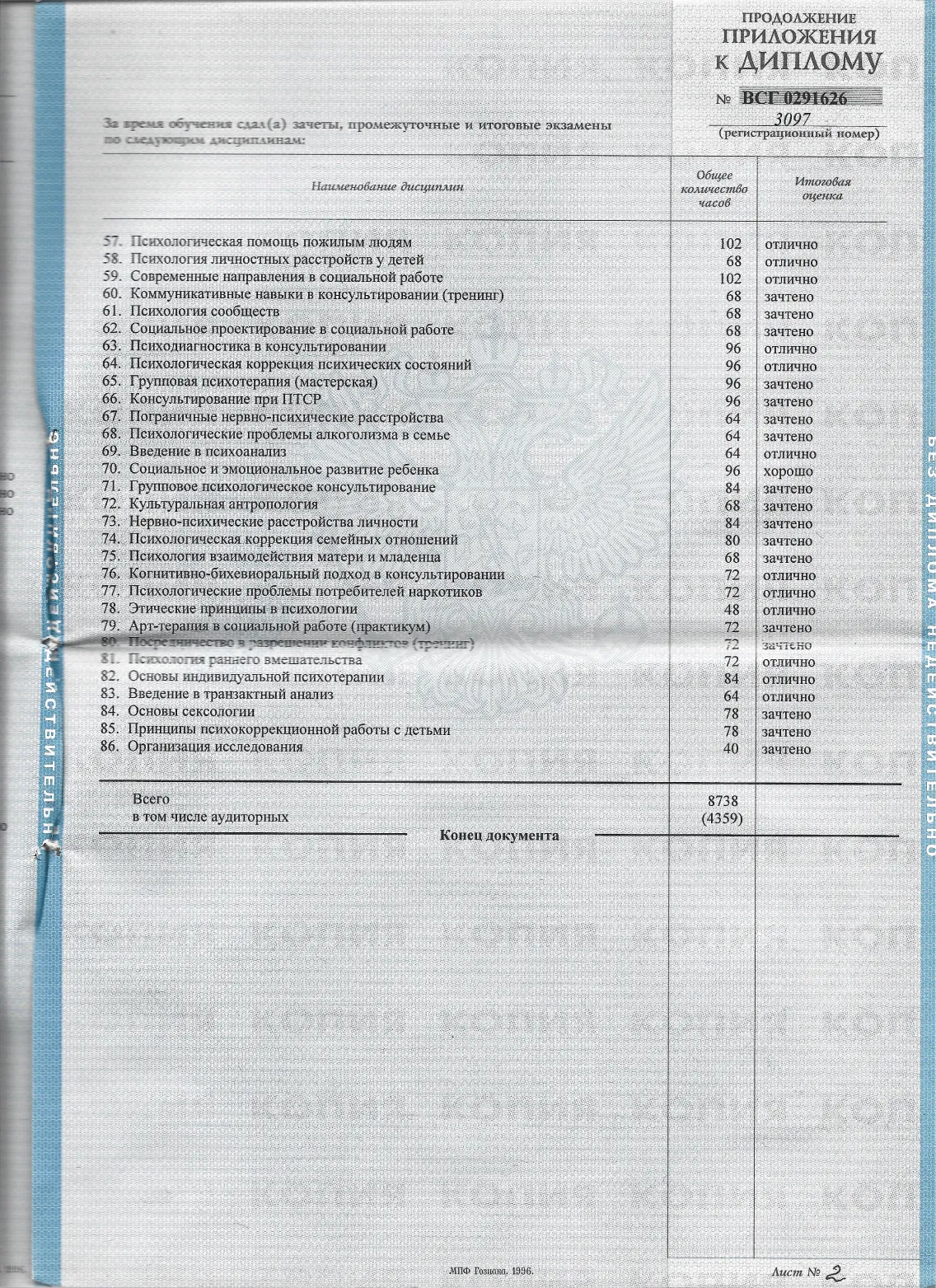
10,205 hours
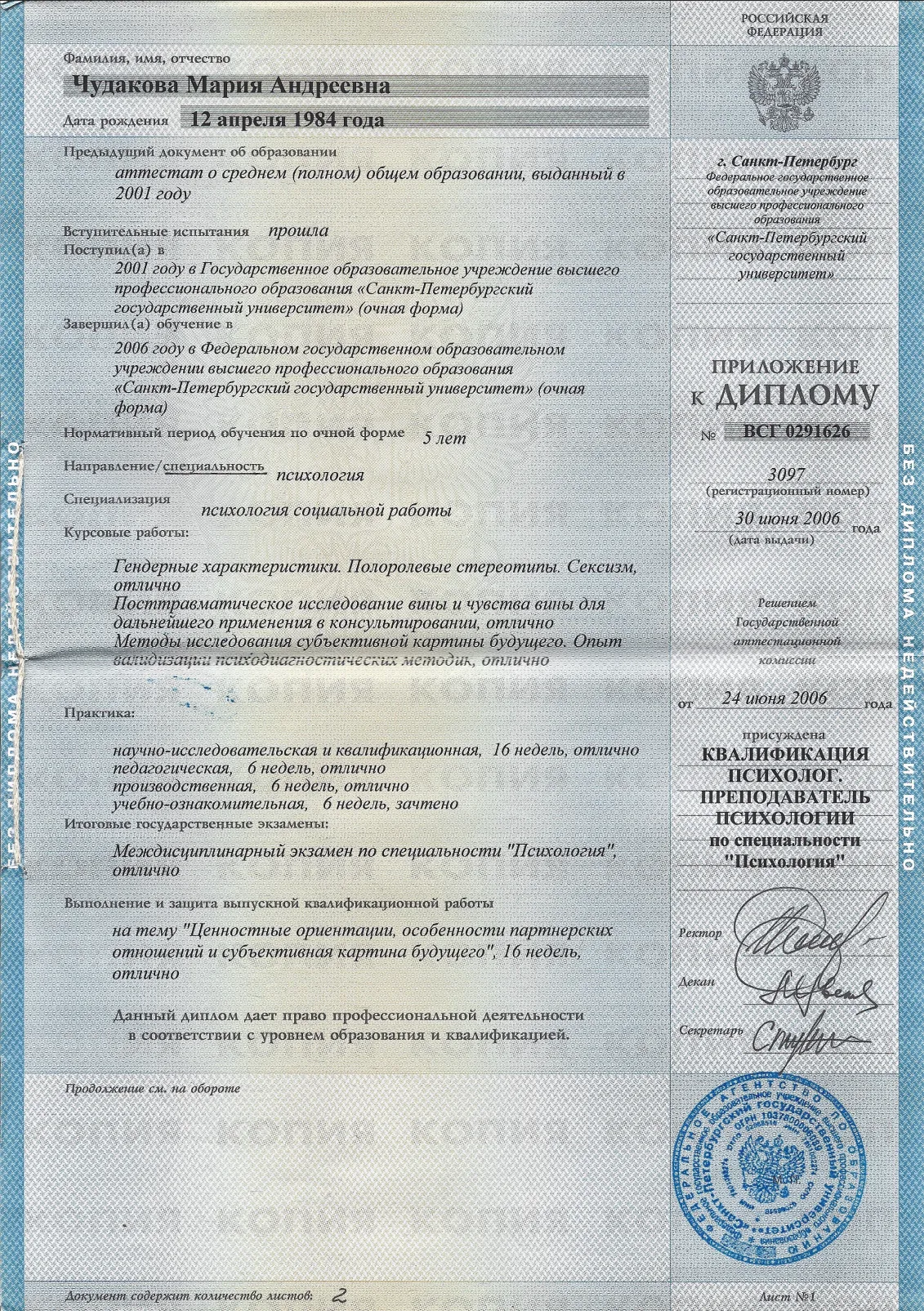
of training: university degree and further courses
40 reviews
from clients on Google
Maria Ilinsky, psychotherapist in London

Who you will be working with

Maria Ilinsky, psychotherapist

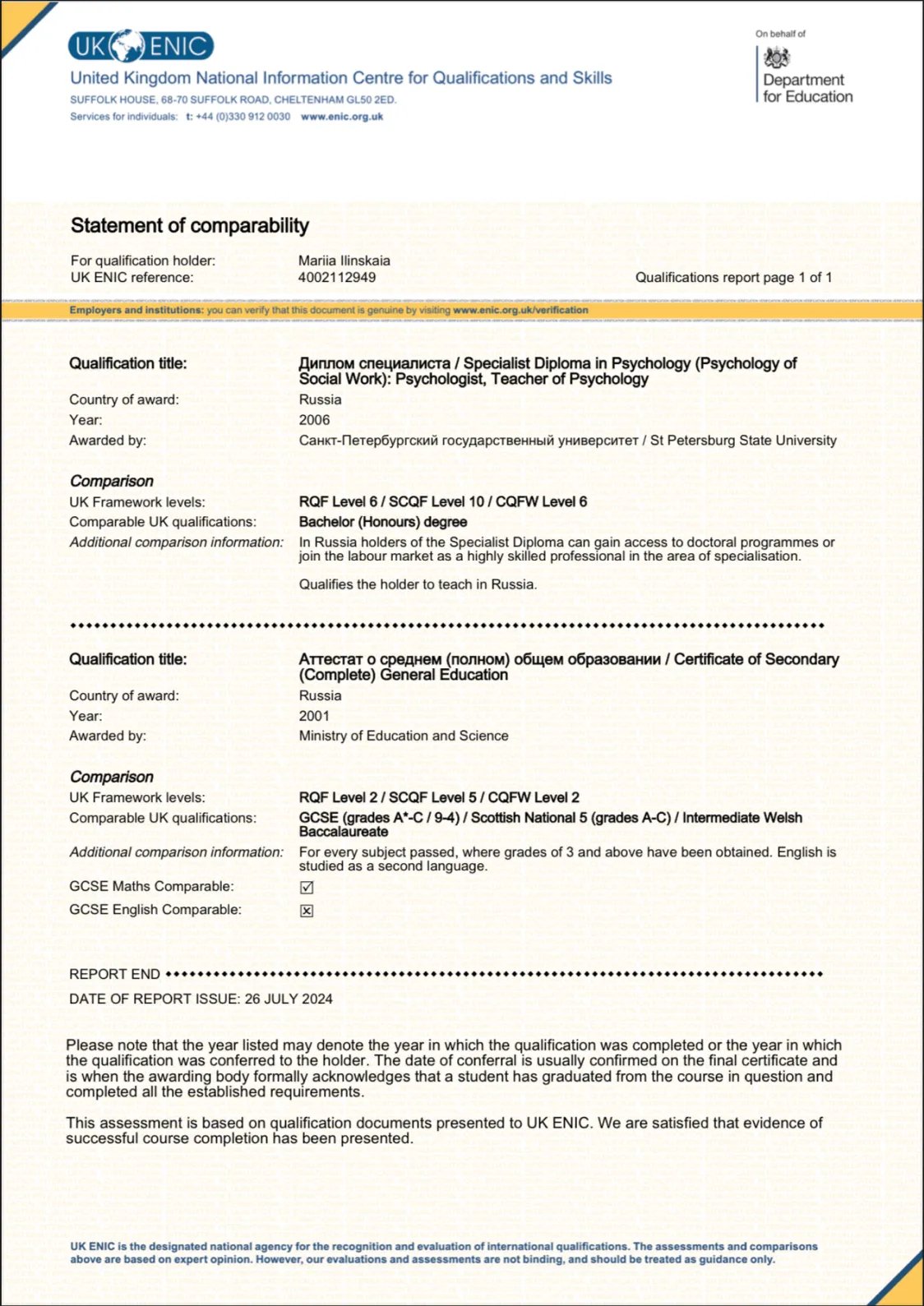
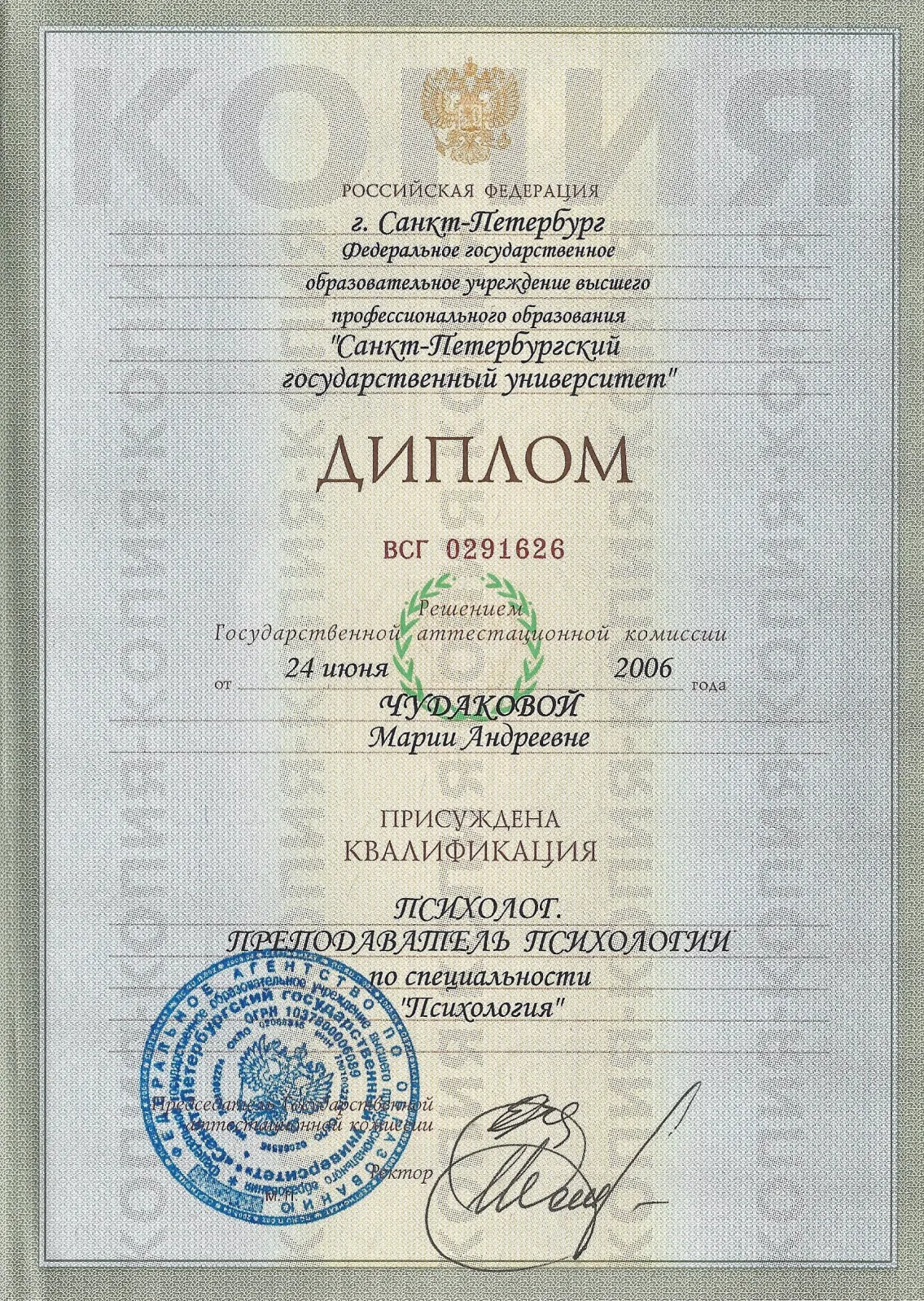
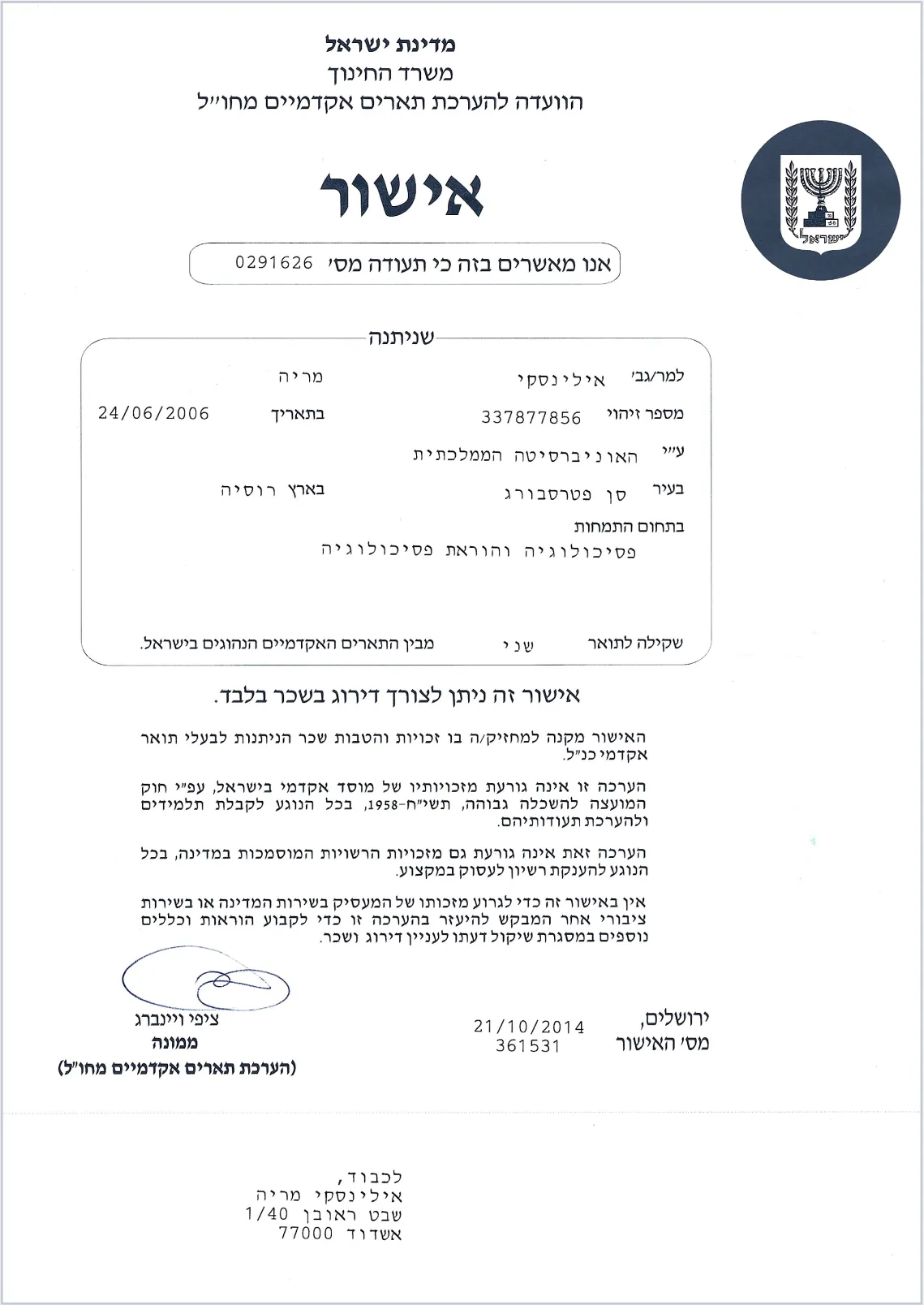
  • Psychology degree, St Petersburg State University; UK ENIC: comparable to a Bachelor’s (Honours) degree
  • Practising since 2006, with breaks; integrative approach, weekly supervision, BPS Code of Ethics
  • I have emigrated twice myself: to Israel (2014) and to the UK (2022)

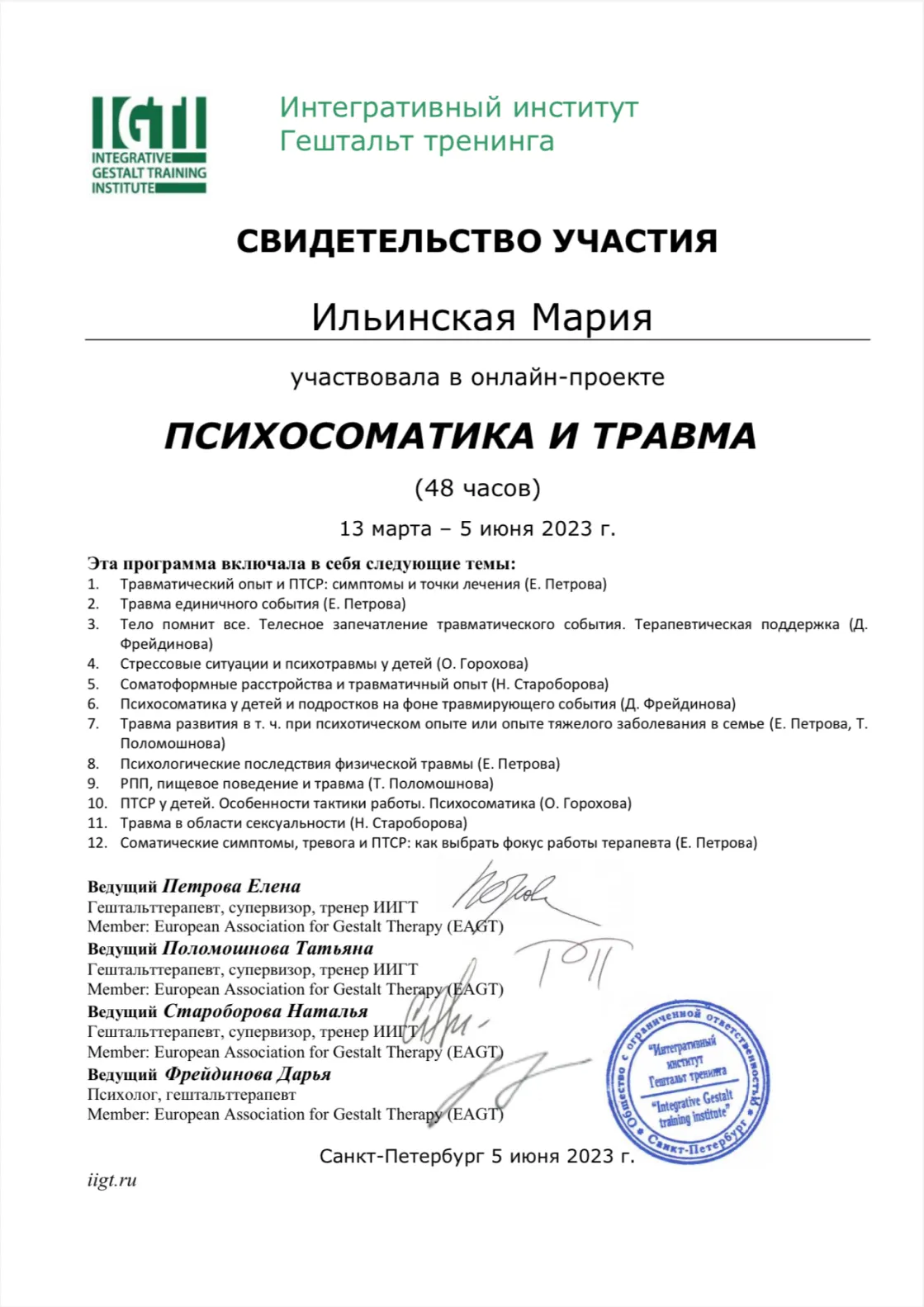
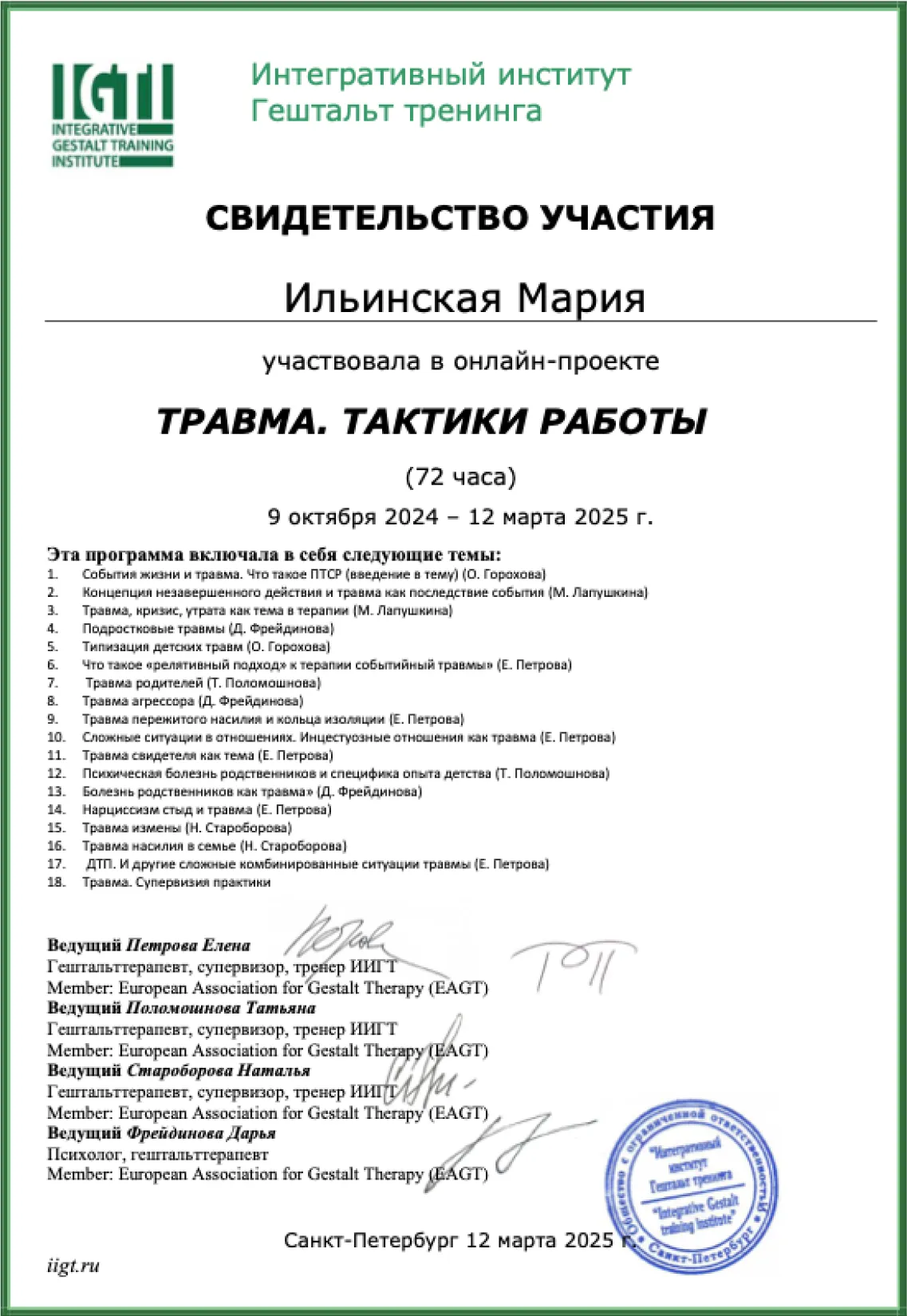
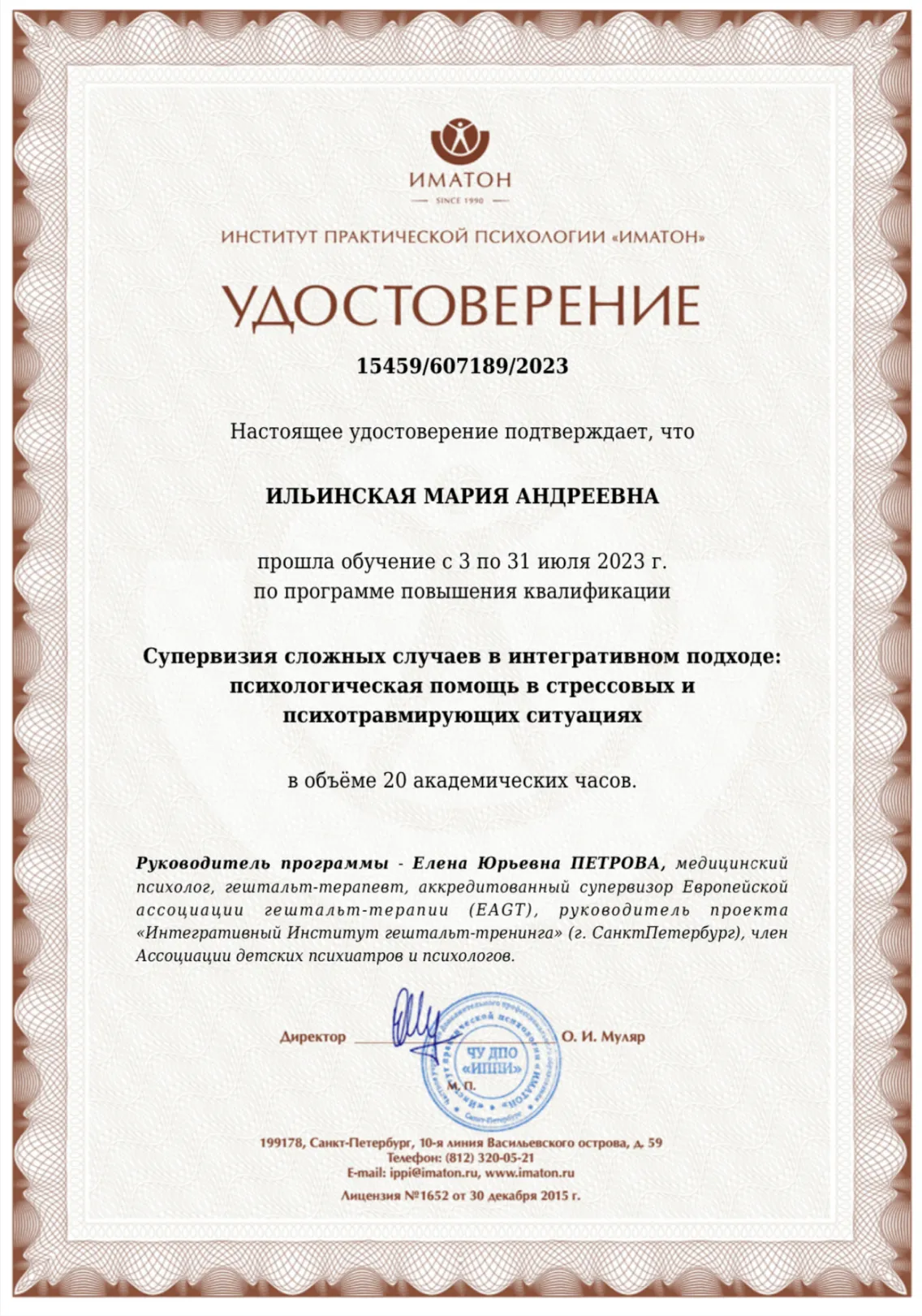
As a counsellor at Maccabi Healthcare Services in Israel, I often worked with anxiety. CPD: Psychosomatics and Trauma, 48 hours (2023). More about me

Calm on the outside, on edge inside

Anxiety doesn’t always look like anxiety. Many people seem fine from the outside: the work gets done, and friends call them the calm one.

Nobody sees the message reread five times, the meeting replayed at 2am, or the tight chest on the Jubilee line on an ordinary Tuesday.

Some people put it down to personality: “I’m just a worrier.” Others come after a first panic attack, half convinced something is wrong with their heart.

What anxiety can feel like day to day

It tends to show up in three places:

  • In the mind: looping thoughts, rehearsing what could go wrong, dread before ordinary things
  • In the body: a racing heart, a tight chest, a churning stomach, waking at 4am already braced
  • In behaviour: putting off calls, over-preparing, cancelling plans, arranging the week around the feeling

Panic attacks

A panic attack is a sudden rush of fear with a pounding heart, breathlessness and dizziness. Many people are sure they are about to faint or have a heart attack.

According to the NHS, most attacks last 5 to 20 minutes and, although frightening, are not dangerous.

Often the fear of the next attack changes daily life more: people avoid the Tube at rush hour or give up the gym.

I work with panic attacks as part of anxiety. In sessions we look at what tends to come before an attack.

We also look at what you do to feel safe, since that can keep the fear going.

New physical symptoms are worth checking with a GP, as some can have medical causes.

Call 999 if chest pain comes on suddenly and does not go away, or spreads to your arm, neck, jaw, stomach or back.

The same applies if it comes with sweating, feeling sick, light-headedness or breathlessness.

What people come to me with

  • Worry that never quite stops: money, the children, a parent’s health
  • Overthinking at night, counting how little sleep is left
  • Work stress: Sunday evenings spent dreading Monday, tiredness a holiday doesn’t shift
  • Social anxiety: dread before a presentation, then hours of going over it
  • Health anxiety: searching symptoms late at night, or avoiding the doctor altogether
  • Anxiety after a move abroad, with visa deadlines and a life to build from scratch

Anxiety and low mood often come together. If worry sits alongside flatness or loss of interest, see therapy for depression.

How I work with anxiety

I work integratively, both in short-term counselling and in longer-term therapy. What we do depends on how your anxiety works.

We often start from something recent, like the moment on the platform when panic began, and slow it down: your thoughts, your body, what you did next.

Over time, patterns show. A single rule, such as “nothing can be left to chance”, may sit behind worries that look unrelated.

Sometimes I suggest an exercise, like noticing your feet on the floor. More often we look at what the anxiety is trying to protect you from.

How to start

  1. Message me in the website chat

    One line is enough. You don’t need to describe the problem in writing.

  2. We agree a time

    In person at 85 Wimpole Street, W1G 9RJ, or online via Zoom. Weekday evenings are available; I don’t work at weekends.

  3. The first session

    50 minutes, £120, the same in person and online. We get to know each other; you share only what you feel ready to share.

    Afterwards you decide whether to book again: no packages, no commitment.

If anxiety is worse at a certain time of day, mention it when we agree a time.

You can cancel or move a session free of charge with at least 48 hours’ notice.

If panic makes getting to Marylebone hard right now, we can start online and meet in person later.

You can ask a question first. I usually reply within an hour. Confidential

Urgent help: 999 or A&E in an emergency · NHS 111, mental health option · Samaritans 116 123, free, any time.

Private therapy or NHS Talking Therapies?

The NHS describes the main symptom of generalised anxiety disorder as stress or worry that affects daily life and is difficult to control.

Whether that diagnosis fits is for a GP to assess. Therapy doesn’t have to wait for a label.

In England, adults registered with a GP can refer themselves to NHS Talking Therapies for free.

For anxiety it usually offers CBT or guided self-help based on CBT, and a GP will usually suggest a talking therapy before medicine.

Private therapy is a different choice, not a better one. Some people come to me after an NHS course, others while they wait.

I am not a member of BACP or UKCP; my BPS membership is listed above.

My blog compares private therapy and the NHS.

I was very nervous before our first session, because it's quite difficult for me to open up in front of strangers

Juliana Var · Translated from Russian

Self-help and when to get help

Slow breathing, regular exercise and avoiding caffeine and alcohol are among the things the NHS suggests for panic. They are worth keeping up in therapy.

It may be time to talk to someone when:

  • anxiety has lasted weeks or months and isn’t easing
  • it is affecting work, sleep, relationships or health
  • more and more of life is arranged around avoiding it
  • self-help works for a while, but the same pattern keeps coming back

When another kind of help may be needed

Sometimes anxiety is part of a wider picture: weeks of little sleep, drinking to get through every evening, thoughts of not wanting to live.

If so, please mention it early. You may need a GP or a psychiatrist alongside therapy, or instead of it.

If you might harm yourself, don’t wait for a session: call 999, go to A&E, or ring Samaritans free on 116 123, day or night.

Sources (6)

What clients say

40 reviews on Google

Questions about anxiety therapy

What type of therapy is best for anxiety? Do you use CBT?

No single therapy suits everyone, and I’m not a CBT therapist. I work integratively: we look at how your anxiety works and what keeps it going.

If you want a CBT course, NHS Talking Therapies may suit you better.

Can therapy help with panic attacks?

It can. Talking therapies are one of the main options the NHS lists for panic disorder.

How quickly things change differs from person to person, so I can’t promise that attacks will stop by a set date.

NHS Talking Therapies is free. Why pay for private sessions?

If the NHS route suits you, there is no need to. Privately, you choose your therapist and the format: Wimpole Street W1 or online, English or Russian.

No packages, and I usually reply within an hour.

How many sessions will I need?

It depends on what you bring and on your pace. Sometimes one session is enough. Short-term counselling usually takes 5–6; therapy means regular sessions for over a year.

I can’t promise a number of sessions.

I’m coping fine at work. Is it really worth coming?

Yes, if the coping costs you a lot: weekends spent recovering, snapping at home, a job you never switch off from.

You can start with one specific thing, such as dreading a weekly meeting.

Can I have therapy while taking medication for anxiety?

Yes, many people do. In sessions we can talk about how you feel about taking it.

Decisions about starting, changing or stopping it belong with whoever prescribed it, usually your GP or a psychiatrist.

Do I need a GP referral or a diagnosis?

No. Private sessions do not need a referral from your GP or a diagnosis.

If you are already seeing your GP or a psychiatrist, therapy can run alongside that care.

What do you work with?

I work with adults (18 and over), individually and with couples. Among mental health conditions: depressive episodes, anxiety disorders and the effects of trauma, including PTSD. I don’t work with bipolar disorder, eating disorders or addictions.

When would you suggest seeing a psychiatrist?

If I notice signs of a condition I don’t work with, I suggest seeing a psychiatrist as well, so that you are not left with therapy alone. If there is a serious risk of suicide, I ask you to see one as soon as possible.

Do you accept health insurance?

Unfortunately no. I work solely as a private psychotherapist and don’t accept insurance.

You can ask a question first. I usually reply within an hour. Confidential

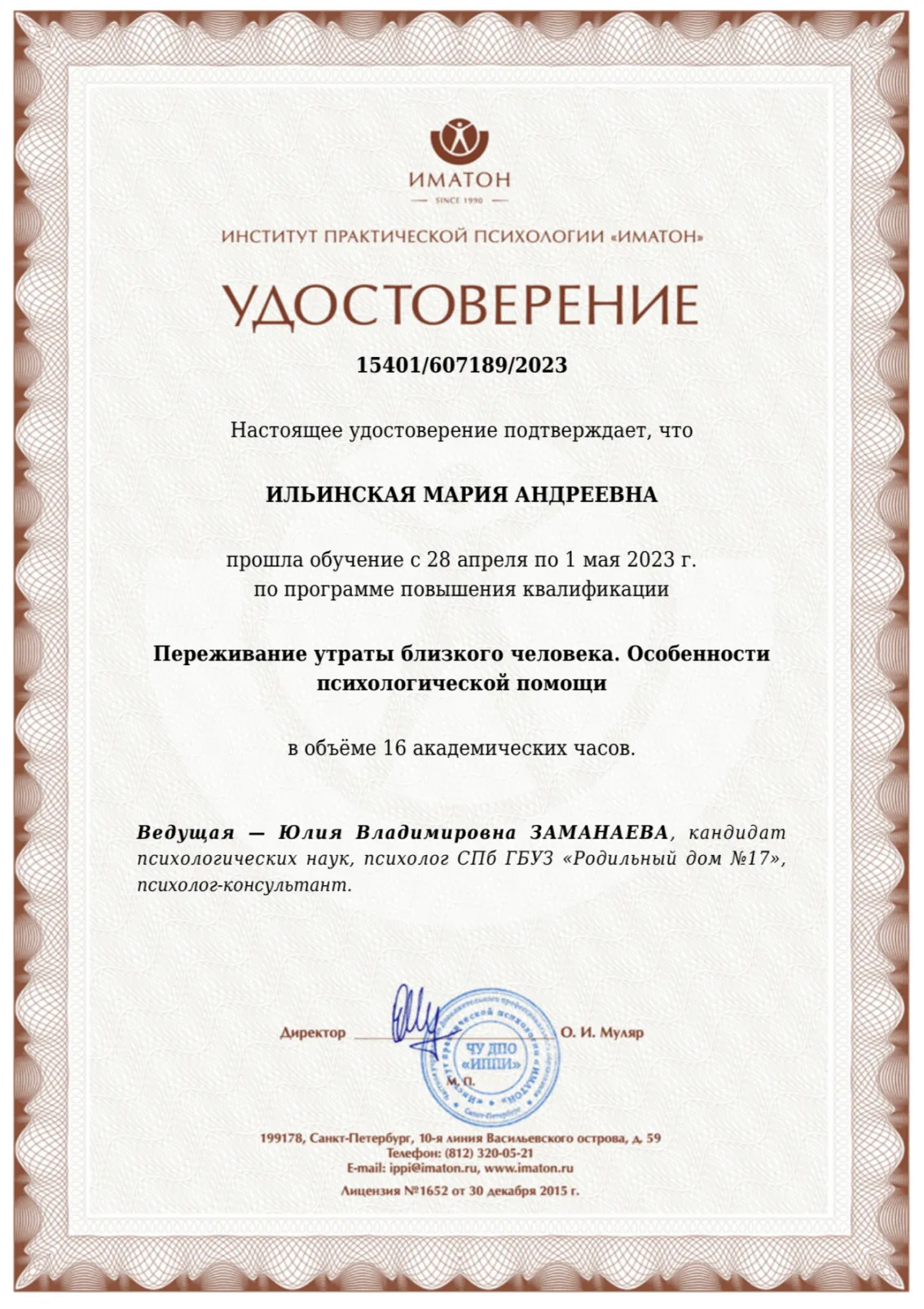
About me and qualifications

My biography

I’m originally from St Petersburg. After university I worked in counselling under supervision and co-facilitated psychology workshops.

In Israel I worked at Maccabi Healthcare Services, mostly with trauma, anxiety and relationship difficulties.

Since moving to the UK, I have had a private practice in central London: individual and couples sessions for adults, in person and online.

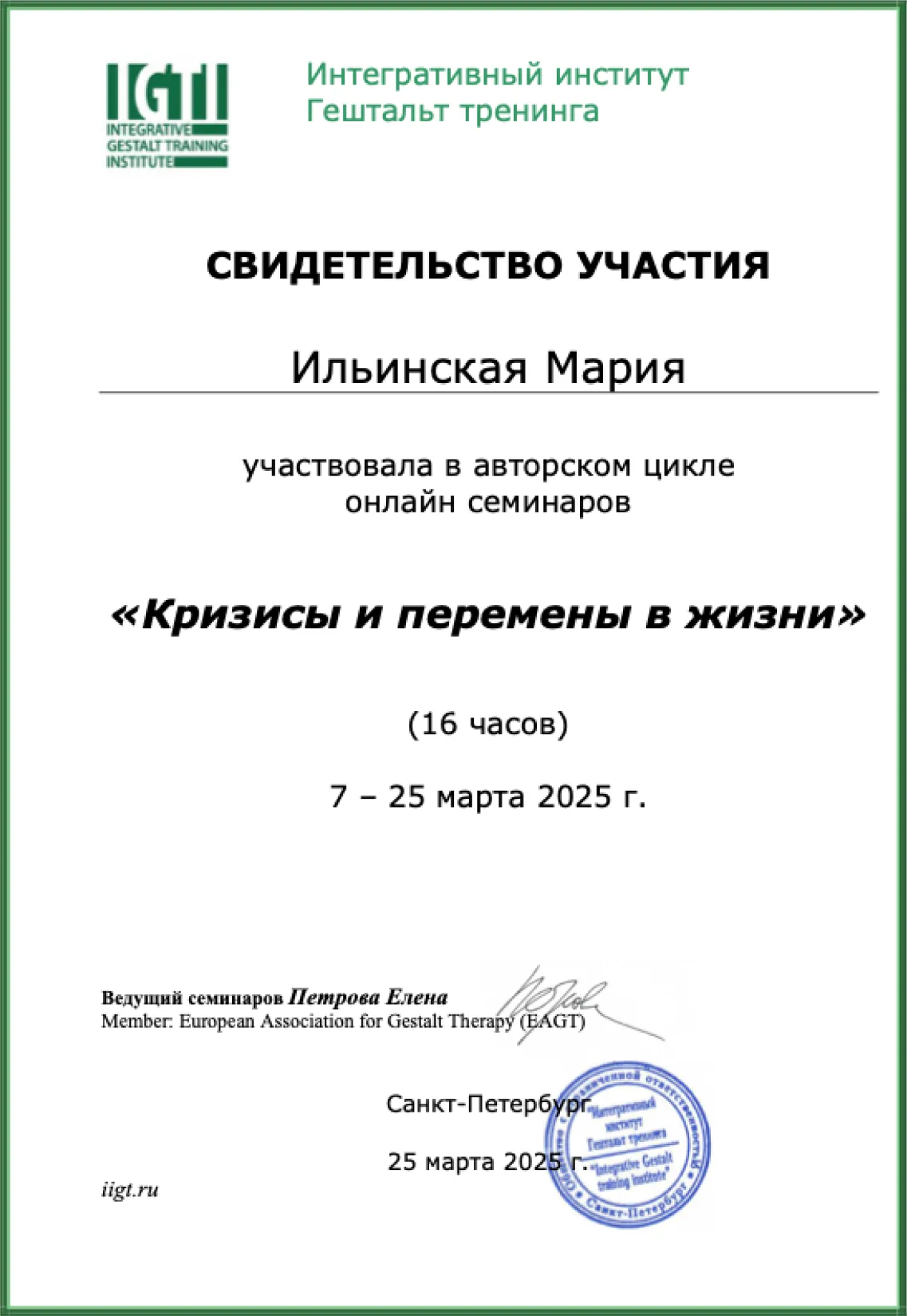
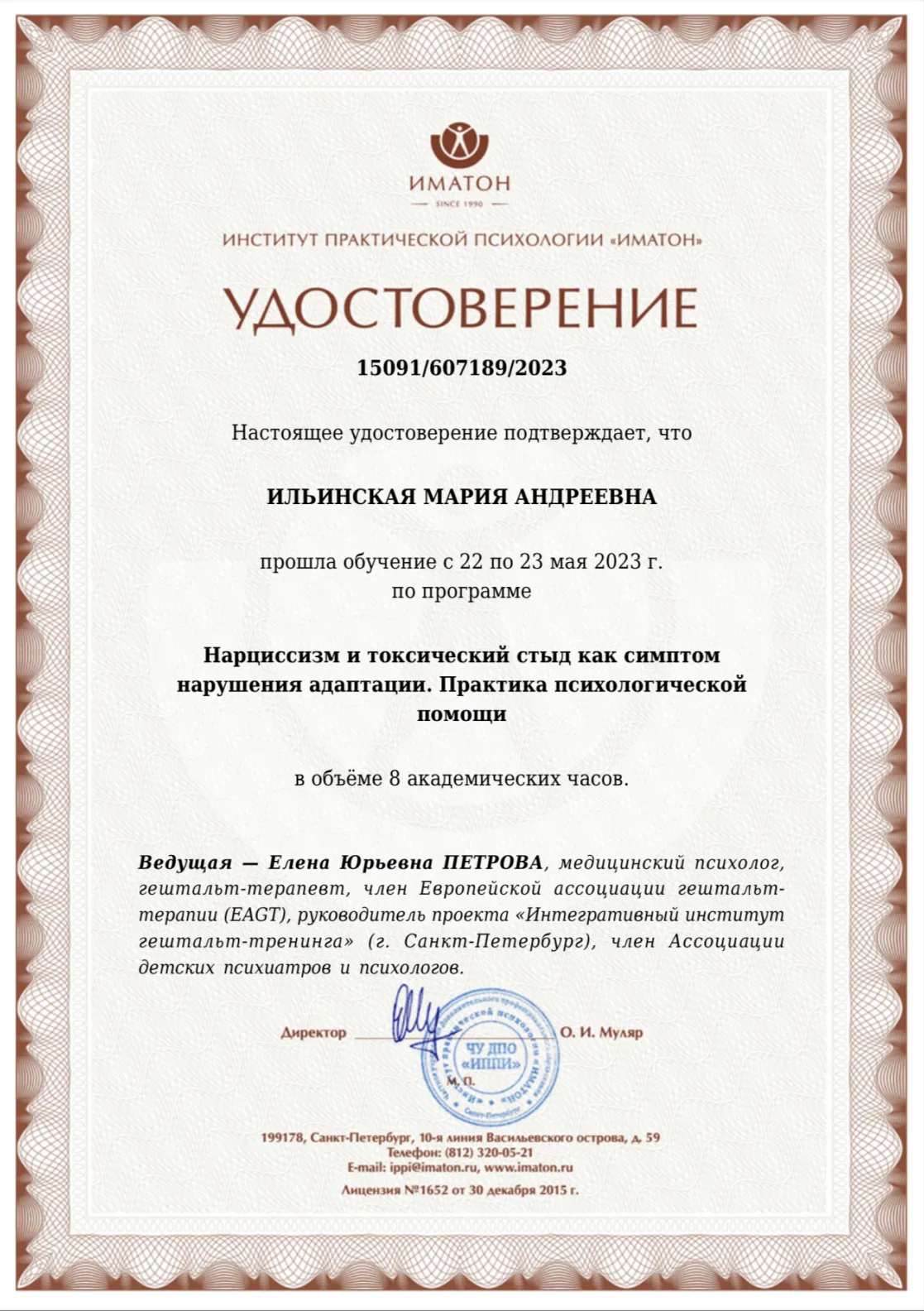
My later training includes courses on trauma work, life crises and changes, and the supervision of complex cases.

I have professional indemnity insurance.